How Stephen Gould Scaled Its Capacity by 30% without Making a Single Hire

Marketing teams need current insight to guide daily decisions, yet scattered tools and slow reporting make this hard to achieve. Operational analytics solves this by showing work and performance in one place, giving teams a live view of pacing, spending, workload, and channel changes. Automatic updates replace manual reporting, which speeds up reactions and improves accuracy. AI and Natural Language data search help teams find answers faster and reduce the effort required for analysis. Slingshot enables this approach with a unified workspace that matches the speed and complexity of modern marketing work.
 Tsvetomira Petrova 10min read
 Executive Summary:
Marketing teams need current insight to guide daily decisions, yet scattered tools and slow reporting make this hard to achieve. Operational analytics solves this by showing work and performance in one place, giving teams a live view of pacing, spending, workload, and channel changes. Automatic updates replace manual reporting, which speeds up reactions and improves accuracy. AI and Natural Language data search help teams find answers faster and reduce the effort required for analysis. Slingshot enables this approach with a unified workspace that matches the speed and complexity of modern marketing work.
Key Takeaways:
Marketing teams often feel the strain of having their work scattered across multiple platforms. You switch tools to track tasks, check results, and prepare reports. None of it sits in one place. Numbers shift before you finish your update. This creates a real gap between work and performance insight.
Teams miss early signals that protect spend and guide pacing. Common issues include budgets that move after the impact, campaigns that drift from targets, uneven workloads across teams, and trends that appear too late to fix.
Operational analytics solves this problem:
The rhythm of marketing work keeps accelerating. Campaign activity shifts within hours, yet many teams still work with reporting cycles built for slower environments. This gap grows each quarter as channels multiply and expectations rise.
Marketing teams now face new timing pressure:
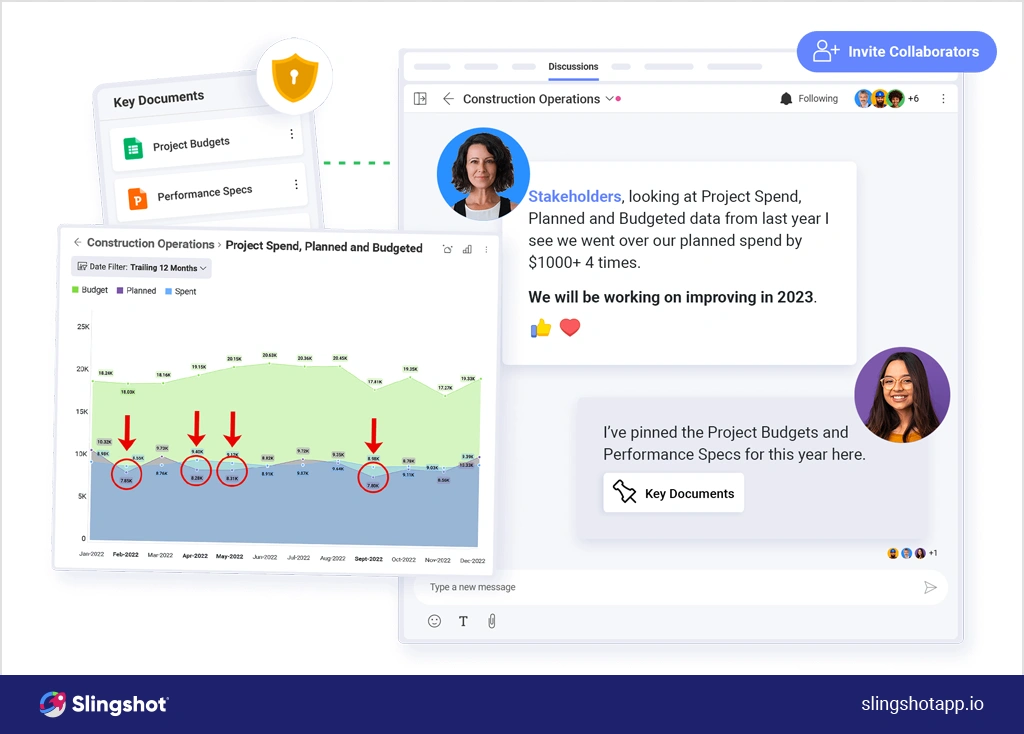
Marketing leaders now need real-time clarity to adjust high-value decisions like:
Most teams check performance through dashboard software that updates at a different rhythm than their daily work. Project tools move at the pace of tasks, but they do not show how performance changes during execution. This split view forces teams to work with partial information.
Most teams want to use data in their daily work, but they rarely get it in a form that helps them act. Reports give a summary. Dashboards give trends. Neither one explains how work and results connect while campaigns run. This is why operational analytics has gained so much attention in marketing teams.
Operational analytics unifies the massive load of information marketing teams need to consider before acting in a single source of truth. More importantly, this happens precisely where they work. Currently, nearly half of employees and leaders use five or more workplace applications per day, with 12% saying they use seven or more.
Operational analytics uses real-time data analysis to connect daily activity with performance signals in one place. This helps teams adjust plans while campaigns move, not after results settle.
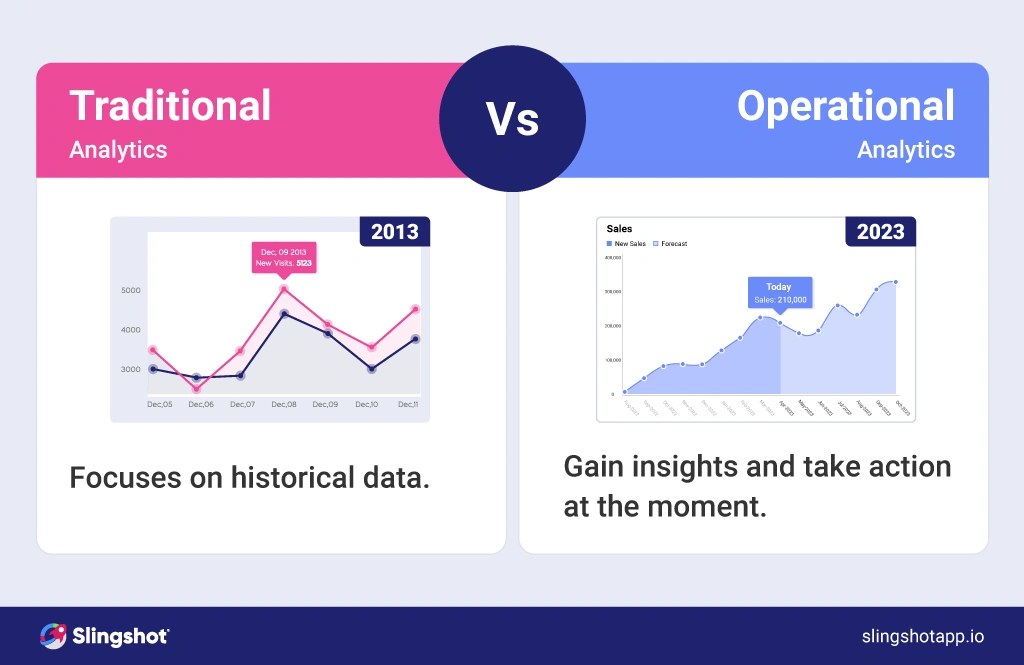
This shift reflects a broader trend in how teams use data. Today, 81 percent of data analytics users rely on embedded analytics. They want insight into the tools they already use. They want clarity without switching between 5-7 systems and platforms. They want the disconnect between work and vital data to be closed.
When work and data are disconnected, these problems are inevitable.
| Problem | How It Shows Up | Impact on Teams |
|---|---|---|
| Scattered tools | Tasks in one place, KPIs in another | Slow decisions and unclear ownership |
| Manual reporting | Exports, slides, screenshots | Outdated insight and wasted time |
| Data silos | CRM, BI, and channel data stored separately | Partial visibility and late reactions |
| Human bottlenecks | One person "knows where things are" | Delays and high dependency |
| Slow review cycles | Weekly or monthly dashboards | Missed early signals and pacing issues |
These gaps block real-time action. But the solution is already out there, and the shift is happening right now.
The traditional reporting model has its place in some industries, but it’s not within fast-paced environments such as modern marketing. As a result, the more forward-thinking marketing agencies already switched to real-time insight models
Here is how the two models differ:
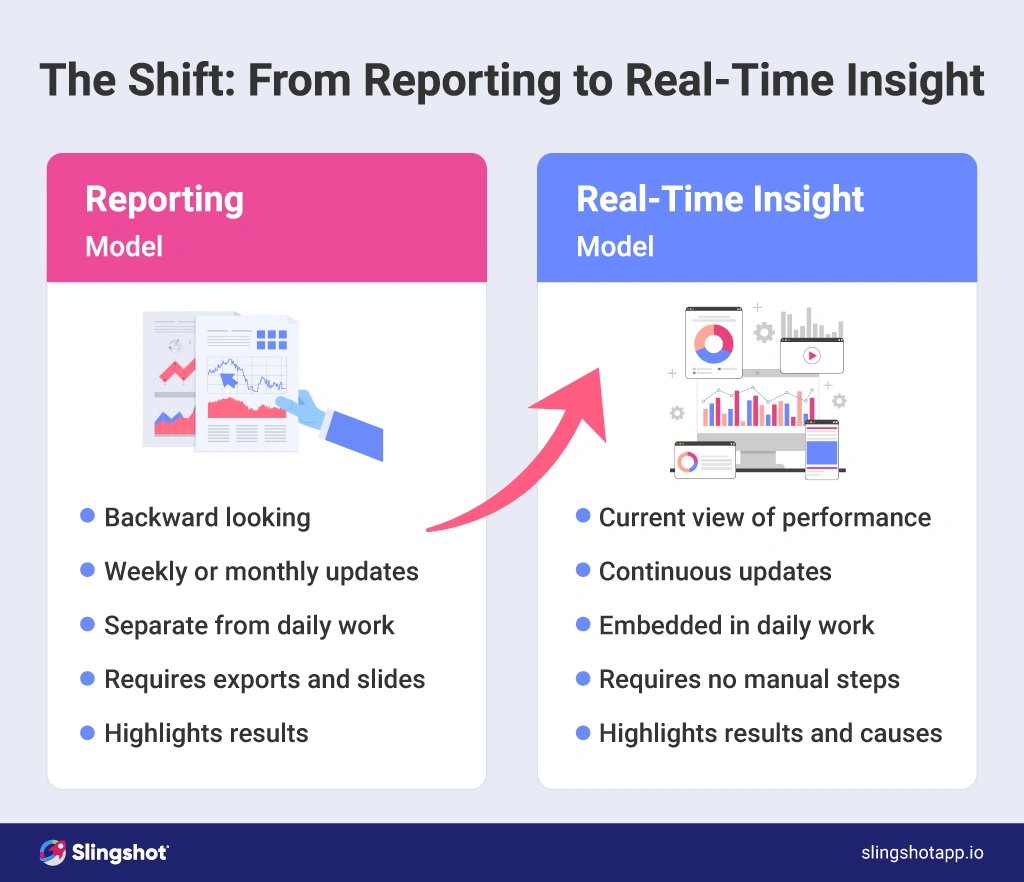
Better timing leads to better outcomes.
Operational analytics works best when marketing teams build a clear structure that ties their work, data, and decision-making into one flow. The goal is simple. You want a system that turns activity into clarity while work moves. So, how do we bring operational analytics to your team in a practical, scalable, and most importantly, adoptable way?
The best operational analytics setups begin with clear decisions.
Your team makes multiple high-value choices during active campaigns, and each one needs timely context.
Marketing leaders often monitor:
These decisions shape how operational analytics for marketing should work because each question requires live insight, not reports that arrive days later.
Consistency makes operational analytics easier to adopt. Use templates to standardize:
Campaign plans
These structures make operational analytics more reliable. They tie work to timelines and provide marketing teams with a clear view of how daily actions impact performance.
Bring KPIs, spend data, and channel metrics into the same workspace where you manage campaigns.
This is where platforms like Slingshot deliver results. At MLB, for example, the team saved $8,000 per month by retiring a design agency contract and cut time to insight by 90% when they brought work and data into one workspace.
We turn insights into immediate action – initiating a promotional campaign to drive up lagging numbers.
Travis Rotondo, IT Applications Manager at MBL
Automation keeps operational analytics for marketing teams up to date. Manual reporting creates delays because the information changes before teams have a chance to review it.
Automation syncs for:
These updates prevent teams from working with old data.
Strong operational analytics supports different needs at each role level. Not everyone works with the same depth of detail, so your views should adjust to each function.
Teams work better when they see insights that match their responsibilities:
A strong setup gives each group the right perspective. This improves confidence in decisions and reduces the guesswork inside your review cycles.
The right operational analytics tool should support the full marketing workflow. It should help you understand what is happening now and how the current work affects results.
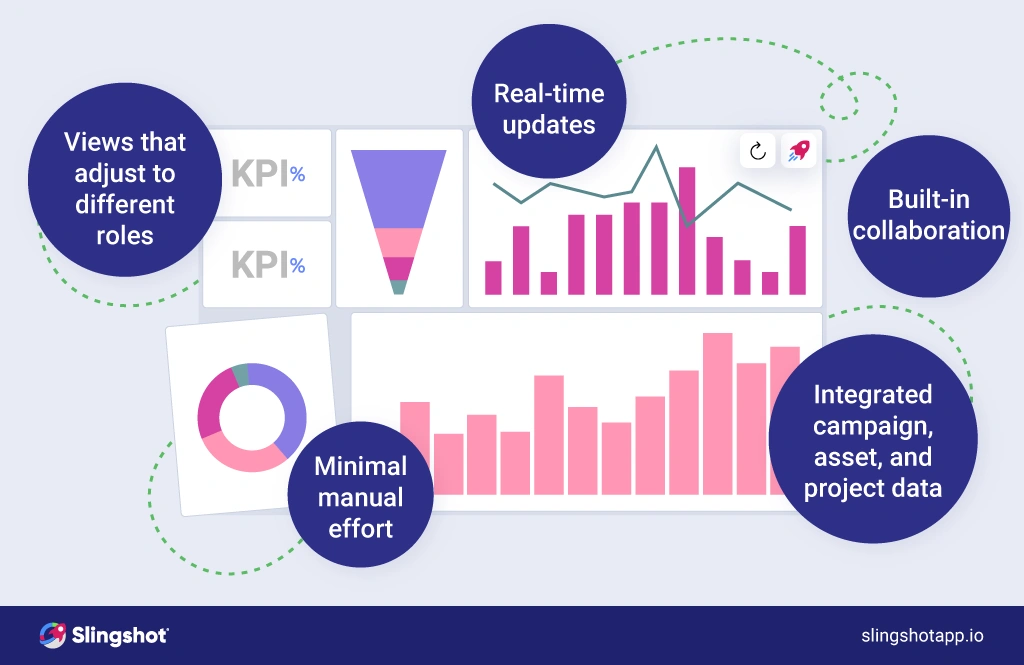
Look for:
These capabilities help teams react earlier and understand the full impact of daily work.
Operational analytics supports these workflows:
Each use case benefits from connected work and performance signals inside the same workspace.
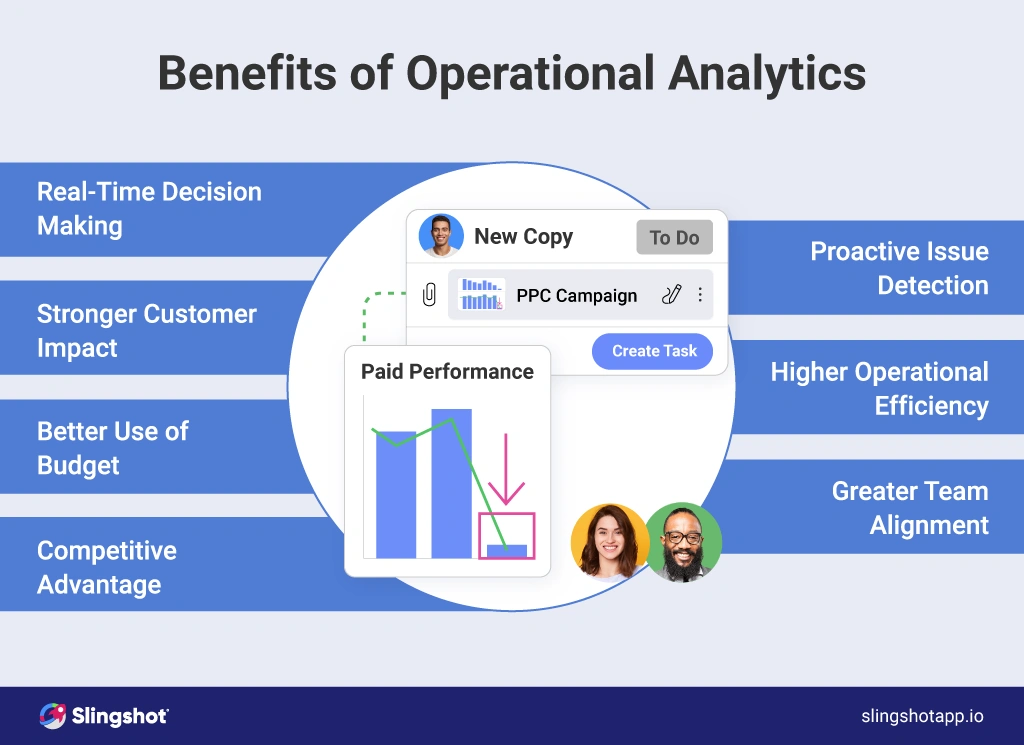
You adjust budgets and assets with confidence. This protects spending and keeps campaigns aligned with your goals.
Teams catch issues early because performance signals update throughout the day. Drops in engagement, slow creative production, and pacing problems become visible before they damage results.
You understand how customers react in real time. This helps you adjust messaging, creative, and channel mix while campaigns run.
You reduce the time spent on updates and reviews. Workloads stay balanced because you see pressure points early. This supports smoother delivery across teams.
Marketing teams protect spending when they catch drift early. You shift budgets sooner and gain more value from each channel.
Everyone sees the same context. Analysts, managers, and executives work from a shared source of truth. This reduces update requests and shortens approval cycles.
Teams with operational analytics move faster than teams with static reporting. You act before problems grow and plan with more accuracy. This speed becomes a long-term advantage in crowded markets.
For example, Stephen Gould increased team capacity by 30 percent without hiring by connecting daily work with live insight.
Slingshot brings operational analytics into the center of your marketing workflow. It connects your work, your data, and your decisions in one place.
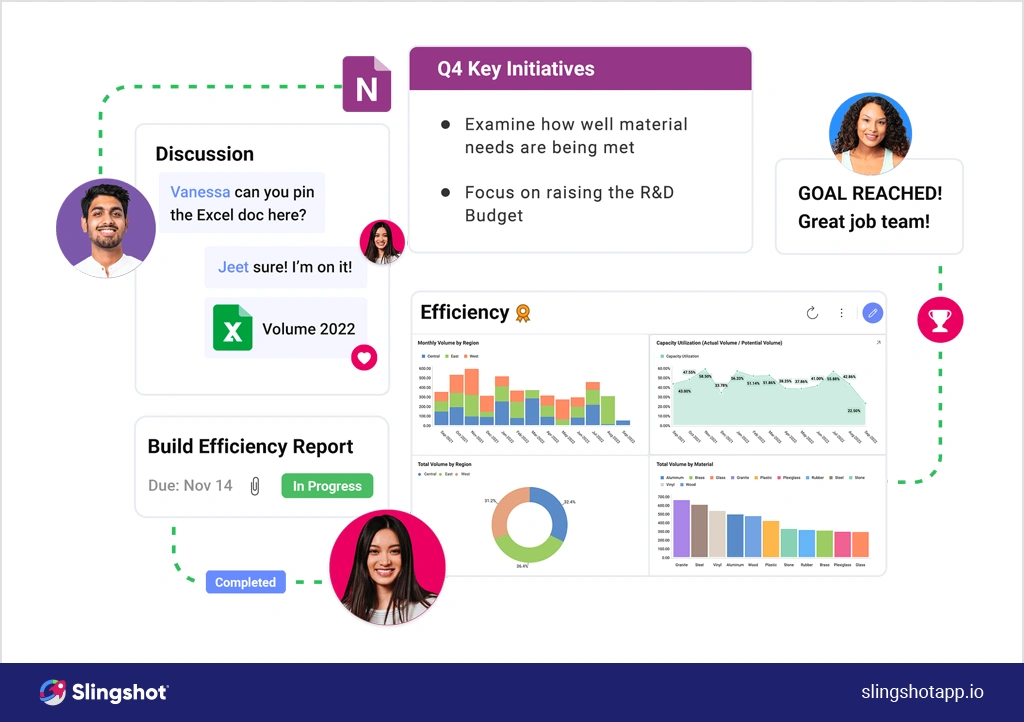
You get features that match the pace of modern work:
Slingshot’s approach brings operational analytics into the rhythm of modern marketing work. It supports quicker decisions, clearer execution, and a connected workflow where teams act on live insight, not lagging reports.

 Return to Blog

 ChatGPT
 Perplexity